Food · Philosophy · 5 min read
Why Chinese Tea Is Not Just Tea: A 5-Minute Crash Course
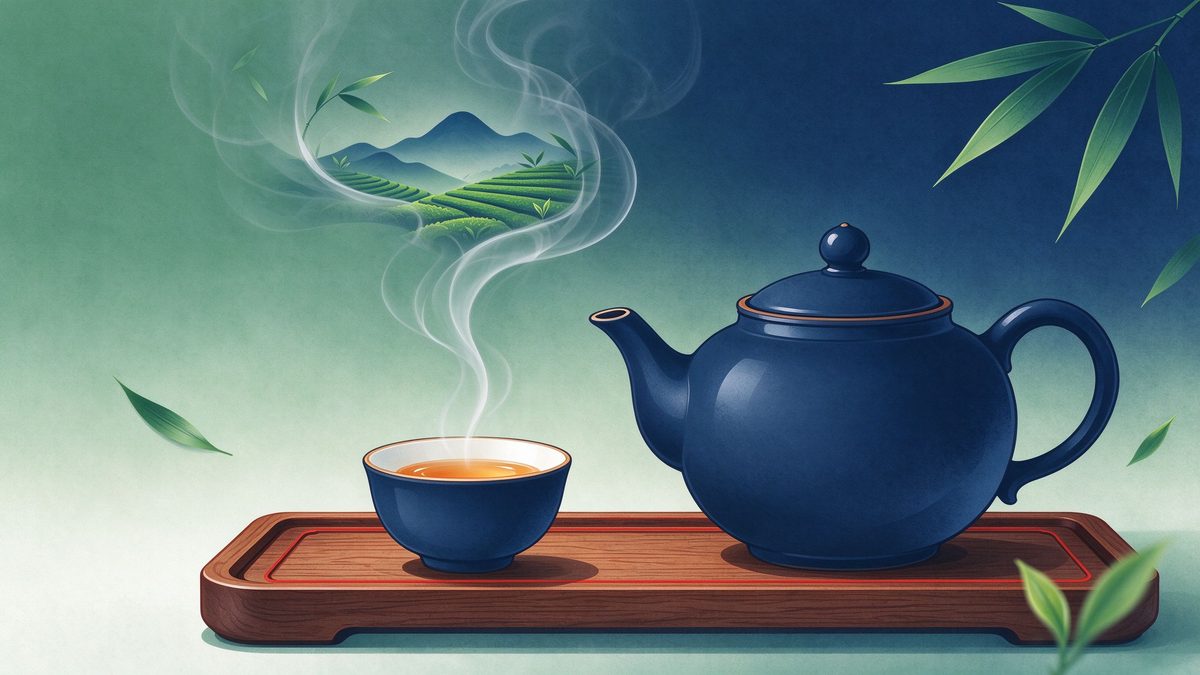
It's the second most-consumed drink on Earth after water, and for 2,000 years it's been a whole ceremony hiding inside a small cup.
The story first — a leaf, an emperor, and an accident
According to legend, around 2737 BCE, the mythical emperor Shennong — the father of Chinese medicine — was boiling water under a tree when a few leaves drifted into his pot. He drank it, found it refreshing, and tea was born. Shennong was famously paranoid about poisoning (he tested hundreds of herbs on himself), so discovering a leaf that made him feel good was a big deal.
That's the origin story: tea started as medicine, became a daily habit, and then became an art form. By the Tang Dynasty (618–907), drinking tea properly was so important that a monk named Lu Yu wrote the world's first tea bible, the Classic of Tea, explaining water quality, brewing times and the right mood. Imagine a 1,200-year-old barista manual that's still studied today.
Your Western analogy
The closest American parallel to Chinese tea culture isn't coffee — it's wine. Think about it: region matters (terroir!), vintage matters, there's a snobbery spectrum, and everyone has an opinion about water temperature. Chinese tea has "appellations" (famous mountains and provinces), aging (some pu'er is stored for decades like fine Bordeaux), and connoisseurs who can identify the mountain a leaf came from by taste.
So next time someone hands you a small cup, don't gulp. Sip like you're tasting a $200 bottle of wine — because that's the cultural weight you're holding.
The six families of tea (all from ONE plant)
Here's the mind-bender: green, white, yellow, oolong, black and pu'er all come from the same plant — Camellia sinensis. The difference is how much the leaves are allowed to oxidize (that's the chemical reaction that turns them darker and richer).
Green (unoxidized): the fresh, grassy one — Longjing from Hangzhou is the celebrity.
Oolong (partially oxidized): the middle path, floral and complex — think Iron Goddess (Tieguanyin).
Black (fully oxidized): the bold one that Westerners call "red tea" (红茶) — the color it leaves in the cup.
Order them by oxidation and you're already more knowledgeable than most café menus.
The dinner-party fact
The Chinese character for tea (茶) traveled the world in two directions: by land to the west, where it became chai (India, and later "chai latte"), and by sea to the south, where the Fujian dialect's te became "tea" in English. That's why "chai" and "tea" both mean tea — one journey by camel, one by ship. One plant, two words, the whole world.
Sources & honesty note: The Shennong legend is traditional folklore (first written accounts appear much later than 2737 BCE — treat the date as legend, not fact). The "one plant, six families" framework is standard tea education used by tea institutions globally. The chai/tea etymology is widely documented by linguists. Facts checked October 2026.