Festival · Culture · 8 min read
Lunar New Year, Explained: The Survival Guide Every American Needs
It's the world's biggest annual human migration — and the most-photographed holiday you've never fully understood. Here's your cheat sheet.
The story first — the Great Race
Every Chinese festival has a story at its heart, and Lunar New Year's origin tale is a monster movie. There was a beast called Nian (年) — the word for "year" itself — that crawled out of hiding every winter to eat crops, livestock and unlucky villagers. One year, the villagers discovered three things Nian was terrified of: the color red, fire, and loud noises.
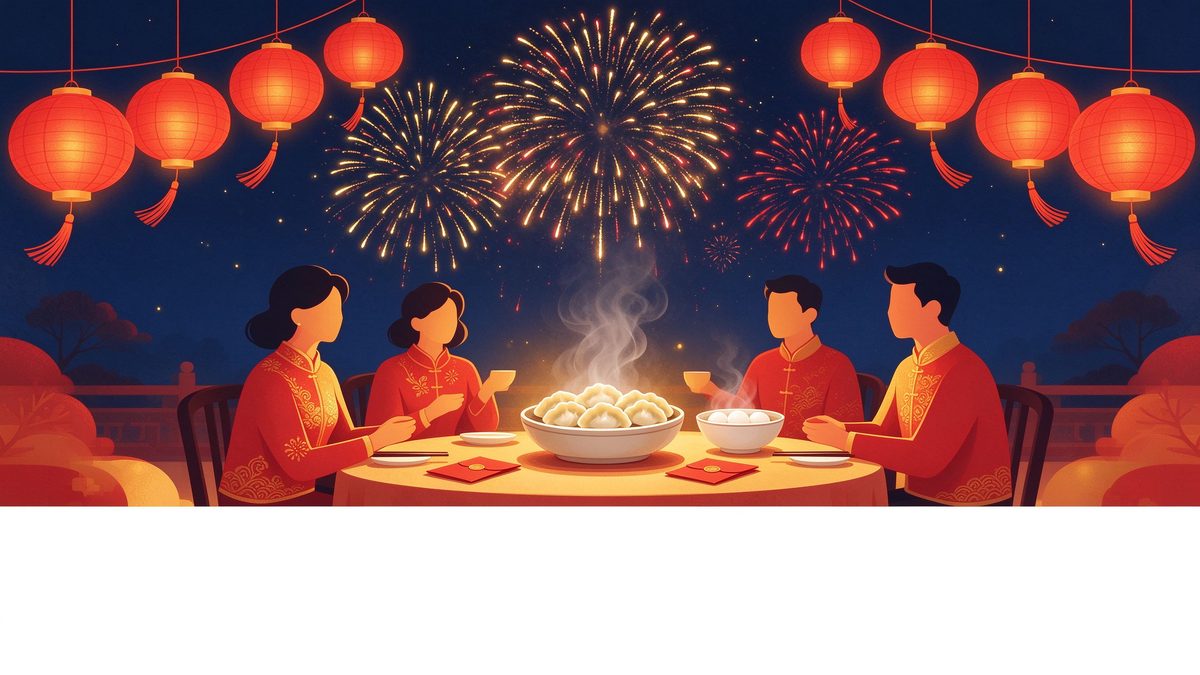
So they hung red banners, lit bonfires, and banged drums all night. It worked. The monster fled, the sun rose, and everyone celebrated surviving — with a banquet for the family. That's why, 4,000 years later, every Lunar New Year is still red lanterns, firecrackers, and the biggest family dinner of the year. You're not just decorating — you're re-enacting the night a village beat a monster.
Your Western analogy
Think of Lunar New Year as Thanksgiving + New Year's Eve + Christmas morning, all in one, lasting 15 days. It's family travel (the largest on the planet — think a billion people going home), it's gift-giving, it's fireworks at midnight, and it's food nobody can stop talking about. The red envelopes (hongbao) are the part Americans love: elders hand kids cash in red packets — a symbol of luck and passing on prosperity.
One important etiquette upgrade: it's called Lunar New Year, not just "Chinese New Year," because Korea (Seollal), Vietnam (Tết) and many others celebrate it too. Saying "Chinese New Year" to a Korean or Vietnamese friend is like calling the Fourth of July "East Coast Day." Nobody's furious, but you'll sound more global if you say Lunar New Year.
What actually happens, day by day (the fun parts)
New Year's Eve: the reunion dinner. In northern China, that means dumplings shaped like old silver ingots — eating them is literally eating wealth.
Day 1: fireworks at midnight, visiting elders, red envelopes for kids. Superstition alert: no sweeping the floor today — you'd be sweeping away your luck.
Day 15 — the Lantern Festival: the grand finale. Glowing lanterns everywhere, sweet tangyuan (rice balls), and a full moon. In many cities, it's basically a night-time carnival.
The dinner-party fact
The number of journeys made during the Spring Festival travel rush (春运) — the "Chunyun" — regularly tops 3 billion trips in a single season. That's roughly the entire population of the planet Earth making a round trip, twice over, in 40 days. The next time you're annoyed by airport security, remember: 3 billion.
Sources & honesty note: The Nian legend is traditional folklore, retold in plain language with the most common version. The 3-billion-trips figure for Chunyun is widely reported by China's Ministry of Transport and international media (2024-2026 reports). The "Lunar New Year vs Chinese New Year" etiquette point is a cultural-preference nuance, not a universal rule. Facts checked October 2026.